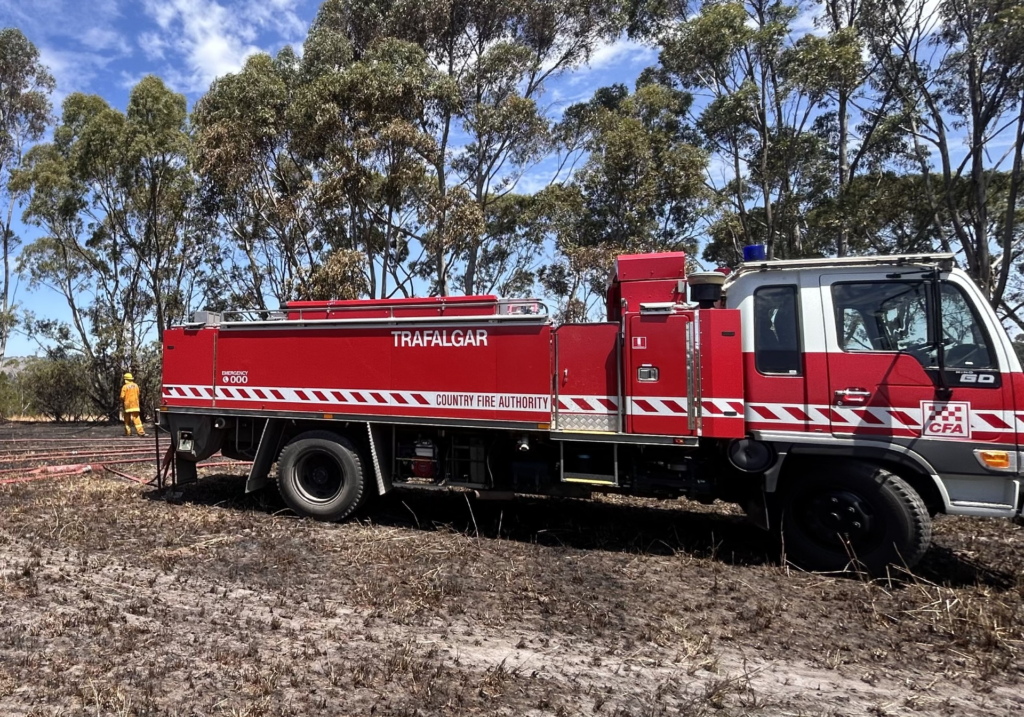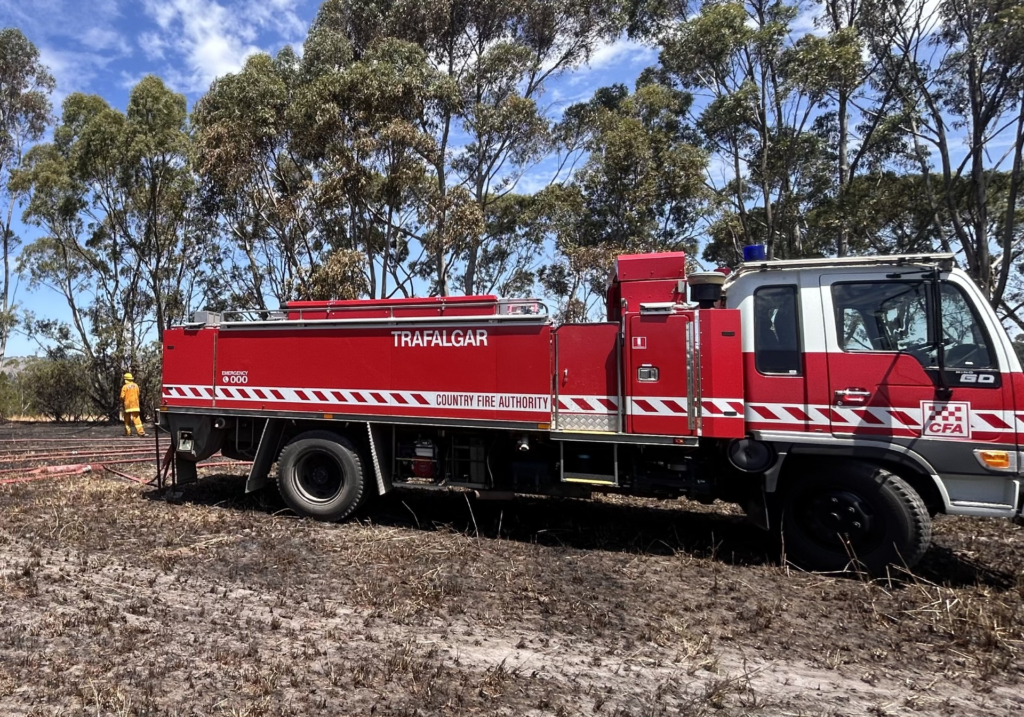
Trafalgar Fire Brigade, founded in 1927 as a Country Urban Fire Brigade before transitioning to a Country Fire Brigade in 1945, is approaching its 100-year milestone in 2027.
Throughout that century of service, the brigade has relied heavily on its firefighting fleet, now the focus of growing concern among members of the local community.
The brigade currently operates three vehicles: a tanker primarily used for grass and bushfires; a pumper for structure fires; and a forward command vehicle (FCV) used for support.
However, the frontline appliances are now significantly aged, with the tanker built in 1997 and the pumper in 2006.
This places the average age of the brigade’s operational appliances at 24 years, well above the National Fire Protection Association’s (NFPA) recommended average of 15 years for frontline firefighting vehicles.
NFPA standards are widely regarded as best-practice benchmarks internationally.
Sources close to the brigade expressed frustration at the ageing equipment: “This tanker has served the community well and still does what it can, but it’s no longer fit for purpose,” one source explained.
“In recent years, reliability issues have become more frequent both on the fireground and during training.”
They also highlighted ongoing safety concerns.
“Volunteer firefighters are still expected to ride on the back of this tanker when travelling to incidents and training.
“No other registered truck allows this because of safety risks, yet firefighters are still placed in that position.
“And being only two-wheel drive, it’s manageable on flat terrain but dangerous on steep or off-road conditions.”
Traf District News has been informed of several breakdowns, where the tanker’s pump failed to operate; a critical malfunction that could endanger lives during an emergency.
While the Country Fire Authority’s (CFA) district maintenance officers provide routine servicing, concerns remain about the lack of manufacturer guidance for vehicles approaching three decades old.
“They just fix each issue as it appears,” a source said.
“One of the pump failures came down to a 50 cent fuse buried deep behind a panel. On another occasion, a fault knocked out the radios, UHF, and low-water alarm.
“To fix it, the maintenance team had to remove the passenger seat to access the wiring.”
The low-water alarm is a mandatory safety feature on CFA frontline appliances, working in conjunction with crew protection spray systems designed to increase firefighter survival during burnover events.
Responsibility for renewing the CFA fleet lies with the state government. However, multiple reports earlier this year have suggested that funding is insufficient to address ongoing fleet ageing, with many tankers continuing to exceed recommended service lifespans.
One community member contrasted the situation with the resources provided to political leaders.
“The Premier rides in a chauffeur-driven hybrid sedan that’s only a few years old, while local firefighters are riding on the back of a decades-old tanker in extreme heat.
“How does that pass the pub test?” the community member said.
Despite the ageing fleet, residents of Trafalgar and surrounding areas continue to express confidence in their volunteer firefighters, who remain committed to doing everything possible with the equipment available.
Community members concerned about the condition of local emergency assets are encouraged to contact their state member, opposition leader, or the Premier’s office to raise the issue of funding and fleet renewal.