Around 80 people attended this year’s Remembrance Day commemoration at the RSL cenotaph in Trafalgar on November 11.
Starting at 11am, Trafalgar Thorpdale RSL president, Jim Crowe, officially welcomed everyone, and then passed the microphone to the sub-branch’s secretary, Chris Johnson, who gave an overview of Remembrance Day.
He said the day “is set aside as a day to remember the sacrifice of those who have died for Australia in wars and conflicts. It was originally known as Armistice Day. Australia is a free and democratic country and this freedom we all enjoy is the legacy of those that have fought and died for this country. We must never forget.
“At 11am on 11 November 1918 the guns of the Western Front fell silent after more than four years continuous warfare. The allied armies had driven the German invaders back, having inflicted heavy defeats upon them over the preceding four months.
“In November the Germans called for an armistice (suspension of fighting) in order to secure a peace settlement. They accepted the allied terms of unconditional surrender.
“The eleventh hour of the eleventh day of the eleventh month attained a special significance in the post-war years. The moment when hostilities ceased on the Western Front became universally associated with the remembrance of those who had died in the war.
“This first modern world conflict had brought about the mobilisation of over 70 million people and left between nine and 13 million dead, perhaps as many as one-third of them with no known grave. The allied nations chose this day and time for the commemoration of their war dead”, he concluded.
The sub-branch’s treasurer, Paul Altamore then informed those present that the Flanders poppy has been a part of Armistice or Remembrance Day ritual since the early 1920s, and is also increasingly being used as part of ANZAC Day observances.
“During the First World War, the red poppies were seen to be among the first living plants that sprouted from the devastation of the battlefields of northern France and Belgium,” he said.
“Soldiers’ folklore had it that the poppies were vivid red from having been nurtured in ground drenched with the blood of their comrades.
“The sight of the poppies on the battlefield at Ypres in 1915 moved Lieutenant Colonel John McCrae to write the poem In Flanders Fields.”
Wreaths were then laid to represent the RSL sub-branch, those lost during World War 1 and World War 2, as well as other conflicts.
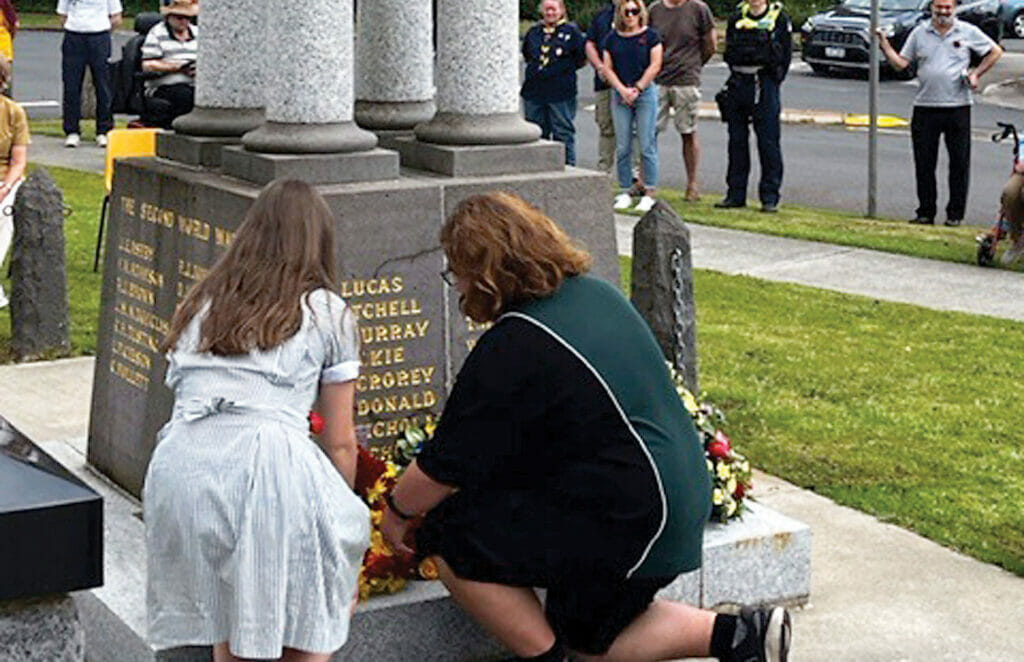
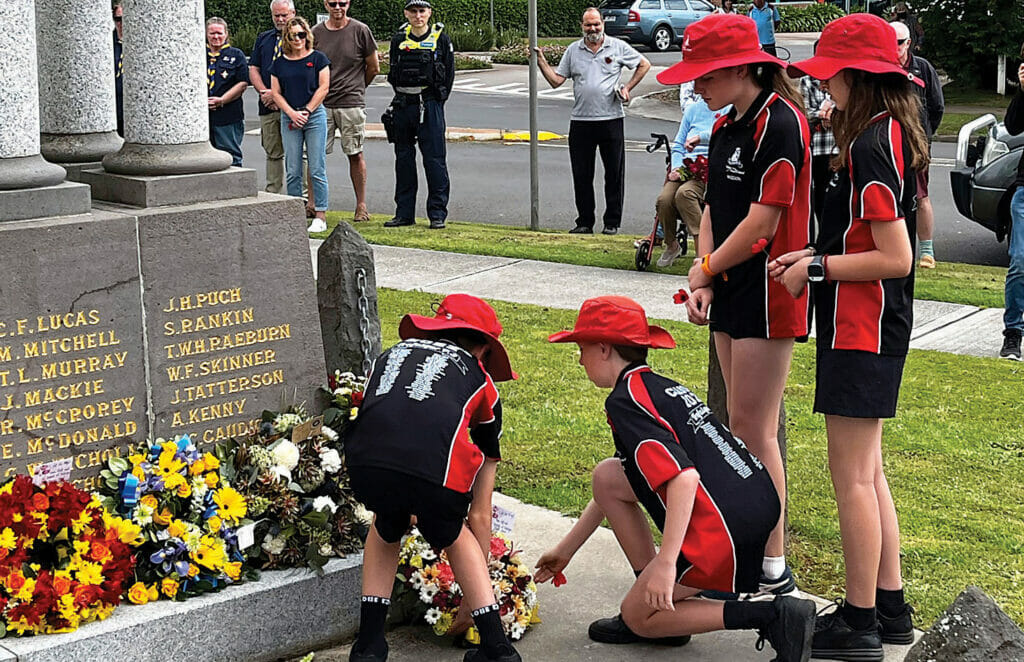
Other wreaths were laid by students from Trafalgar Primary and Trafalgar High School, as well as Baw Baw Shire Council.
A number of those present then accepted Jim’s invitation to lay a poppy as a personal gesture of remembrance.
The Ode then followed with the Last Post before Rouse was played and the flag raised to mast head.
Prior to the national anthem, the names of all those on the cenotaph were read.
The RSL sub-branch then conducted a similar commemoration at Thorpdale’s cenotaph at midday.
Photo captions:
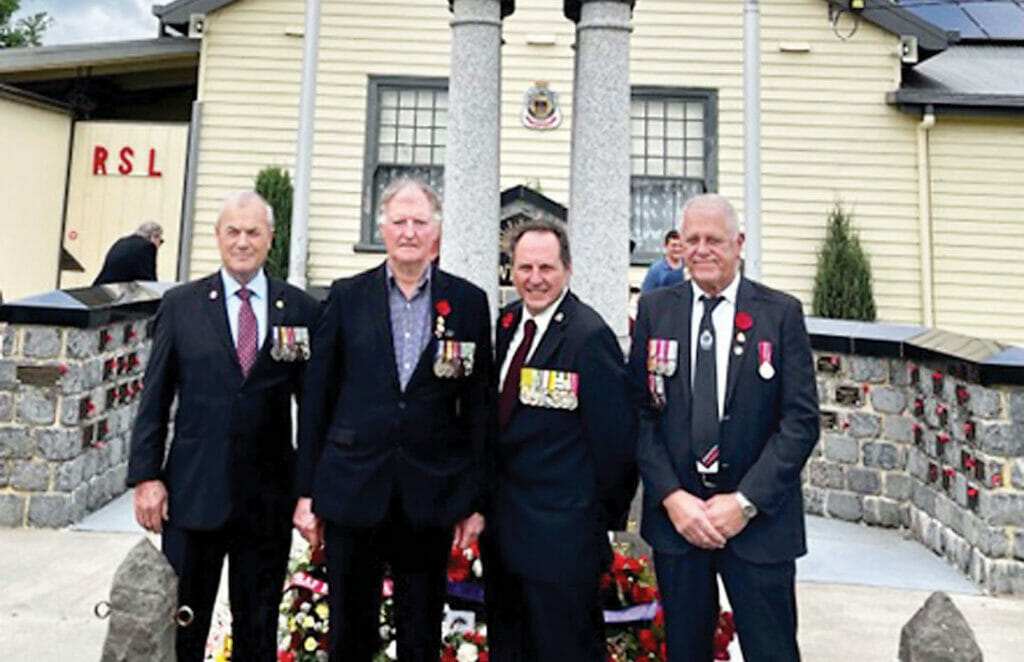
- Trafalgar Thorpdale RSL sub-branch with fellow Vietnam veteran Bill Kilday, treasurer Paul Altamore and secretary Chris Johnson.
- Wreath laid by Trafalgar Primary School students.
- Wreath laid by Trafalgar High School students.
- Wreath laid by Dellas Edwards on behalf of World War I veterans.
- Some of the 80 local residents who attended the Remembrance Day commemoration.
- Veteran Bob Moss (facing camera) attended, along with Les and Marge Bartlett talking to Peter Battey.